All 1980s Hip Hop Artist 1980s Hip Hop Art
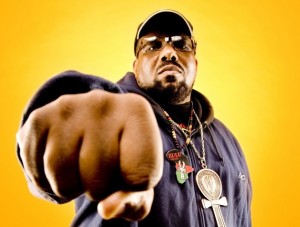
The 1980s marked the diversification of hip-hop every bit the genre developed more complex styles. Early examples of the diversification process can exist identified through such tracks as Grandmaster Flash's "The Adventures of Grandmaster Flash on the Wheels of Steel" (1981), a single consisting entirely of sampled tracks equally well as Afrika Bambaataa's "Planet Stone" (1982), which signified the fusion of hip-hop music with electro.
Heavy usage of the new generation of drum machines such equally the Oberheim DMX and Roland 808 models was a characteristic of many 1980s songs. To this day, the 808 boot drum is traditionally used by hip-hop producers. Over time sampling technology became more advanced; however, earlier producers such as Marley Marl used drum machines to construct their beats from pocket-sized excerpts of other beats in synchronization. Later on, samplers such equally the East-mu SP-1200 allowed non simply more retention, simply more than flexibility for creative production. This allowed the filtration and layering different hits, and with a possibility of re-sequencing them into a single piece.
The lyrical content of hip-hop evolved likewise. The early styles presented in the 1970s soon were replaced with metaphorical lyrics over more complex, multi-layered instrumentals. Artists such every bit Melle Mel, Rakim, Chuck D, KRS-One and Warp ix revolutionized hip-hop by transforming it into a more mature art class, with sophisticated arrangements, often featuring "gorgeous textures and multiple layers".
Prior to the 1980s, hip-hop music was largely confined inside the context of the U.s.. All the same, during the 1980s, information technology began its spread and became a role of the music scene in dozens of countries. Greg Wilson was the beginning DJ to introduce electro hip-hop to United kingdom club audiences in the early 1980s.
In the early part of the decade, b-boying became the first aspect of hip-hop culture to reach Nihon, Australia and Southward Africa, where the crew Black Noise established the practice earlier start to rap later on in the decade.
Musician and presenter Sidney became French republic's kickoff black Boob tube presenter with his show H.I.P. H.O.P., which screened on TF1 during 1984, a offset for the genre worldwide. Radio Nova helped launched other French stars including Dee Nasty contributed to a general awareness of hip-hop in France.
Hip-hop ever kept a close relationship with the Latino community in New York. DJ Disco Wiz and Rock Steady Crew were amongst early innovators from Puerto Rico, combining English and Spanish in the lyrics.
Japanese hip-hop is said to accept begun when Hiroshi Fujiwara returned to Japan and started playing hip-hop records in the early 1980s. Japanese hip-hop generally tends to be about straight influenced by old schoolhouse hip-hop, taking from the era's tricky beats, dance, culture, and overall fun and carefree nature and incorporating information technology into their music. Every bit a issue, hip-hop stands as 1 of the well-nigh commercially viable mainstream music genres in Japan, and the line between it and pop music is oft blurred.


New School Hip-Hop
The new school of hip-hop was the second wave of hip-hop music, originating in 1983-1984 with the early records of Run-D.Thou.C. and LL Absurd J. As with the hip-hop preceding it, the new school came predominately from New York City. The new schoolhouse was initially characterized in form past drum machines, with influences from rock music. It was notable for taunts and boasts nearly rapping, socio-political commentary, both delivered in an aggressive, self-assertive style. In image as in song its artists projected a tough, cool, street b-boy attitude. These elements contrasted sharply with the funk and disco influenced outfits, novelty hits, alive bands, synthesizers and party rhymes of artists prevalent prior to 1984. New school artists made shorter songs that could more than easily gain radio play, and more cohesive LPs than their one-time school counterparts. By 1986 their releases began to institute the hip-hop album every bit a fixture of the mainstream. Hip-hop music became commercially successful.
Golden Historic period Hip-Hop
Hip-hop'due south "golden age" (or "golden era") is a proper noun given to a period in mainstream hip-hop—usually cited as between the mid-1980s and the early on 1990s—said to exist characterized by its diversity, quality, innovation and influence. There were strong themes of Afrocentrism and political militancy, while the music was experimental and the sampling, eclectic. In that location was oft a strong jazz influence. The artists most frequently associated with the phrase are Public Enemy , Boogie Down Productions Boogie Down Productions, Eric B. & Rakim, De La Soul, A Tribe Called Quest, Gang Starr, Big Daddy Kane and the Jungle Brothers.
The aureate historic period is noted for its innovation – a time "when it seemed that every new single reinvented the genre" according to Rolling Stone. Referring to "hip-hop in its golden historic period", Spin's editor-in-main Sia Michel says, "there were and then many important, groundbreaking albums coming out right virtually that fourth dimension," and MTV'due south Sway Calloway adds: "The thing that made that era so swell is that nothing was contrived. Everything was still being discovered and everything was still innovative and new." "What made the era they inaugurated worthy of the term golden was the sheer number of stylistic innovations that came into existence…in these golden years, a disquisitional mass of mic prodigies were literally creating themselves and their fine art form at the aforementioned time."
Gangsta Rap and West Coast Hip-Hop
Gangsta rap is a subgenre of hip-hop that reflects the trigger-happy lifestyles of inner-urban center American black youths. The genre was pioneered in the mid-1980s by rappers such equally Schoolly D and Water ice-T Ice-T, and was popularized in the later on part of the 1980s by groups like N.W.A. Due north.W.A. Ice-T released "6 in the Mornin", which is ofttimes regarded as the first gangsta rap song, in 1986. Afterward the national attending that Ice-T and N.Westward.A. created in the late 1980s and early 1990s, gangsta rap became the near commercially lucrative subgenre of hip-hop. N.W.A. is the group almost often associated with the founding of gangsta rap. Their lyrics were more violent, openly confrontational, and shocking than those of established rap acts, featuring incessant profanity and controversial words. These lyrics were placed over crude, rock guitar-driven beats, contributing to the music's hard-edged experience.
The subject field matter inherent in gangsta rap more generally has acquired controversy. The White House adminstrations of both George Bush-league senior and Nib Clinton criticized the genre. "The reason why rap is under attack is because it exposes all the contradictions of American culture…What started out every bit an underground art form has become a vehicle to betrayal a lot of critical issues that are non unremarkably discussed in American politics. The problem here is that the White House and wanna-bes like Nib Clinton represent a political organization that never intends to bargain with inner city urban chaos," Sister Souljah told The Times.
Planet Rock – Afrika Bambaataa
Eric B. & Rakim'due south Paid in Full Album
Newcleus'due southJam On Information technology Album
A Tribe Called Quests'Midnight Marauders Album
References
David Toop (1984/1991).Rap Assault Ii: African Rap To Global Hip Hop. New York. New York: Ophidian's Tail. ISBN ane-85242-243-two.
McLeod, Kembrew. Interview with Chuck D and Hank Shocklee. 2002.Stay Free Magazine.
Corvino, Daniel and Livernoche, Shawn (2000).A Brief History of Rhyme and Bass: Growing Up With Hip Hop. Tinicum, PA: Xlibris Corporation/The Lightning Source, Inc.ISBN 1-4010-2851-ix
Hess, Mickey (2009).Hip Hop in America: A Regional Guide: Volume 1: East Coast and West Coast Greenwood. ISBN 0313343233
Rose, Tricia (1994). "Black Noise". Middletown, Connecticut: Wesleyan University Press. ISBN 0-8195-6275-0
Potter, Russell (1995)Spectacular Vernaculars: Hip-Hop and the Politics of Postmodernism. Albany: SUNY Printing. ISBN 0-7914-2626-two
Light, Alan (ed). (1999).The VIBE History of Hip-Hop. New York: 3 Rivers Press. ISBN 0-609-80503-7
George, Nelson (2000, rev. 2005).Hip-Hop America. New York: Penguin Books. ISBN 0-xiv-028022-seven
Fricke, Jim and Ahearn, Charlie (eds). (2002).Yes Yes Y'All: The Experience Music Project Oral History of Hip Hop's Beginning Decade. New York: Da Capo Press. ISBN 0-306-81184-7
Kitwana, Bakar (2004). The Country of Hip-Hop Generation: how hip-hop'south culture motion is evolving into political power Retrieved December four, 2006. From Ohio Link Database
Chang, Jeff (2005).Can't Stop Won't Stop: A History of the Hip-Hop Generation. Picador, ISBN 0-312-42579-1.
hoskinaluslaccoich.blogspot.com
Source: https://historyofthehiphop.wordpress.com/history/1980s/
0 Response to "All 1980s Hip Hop Artist 1980s Hip Hop Art"
Post a Comment